The Bottleneck Nobody Talks About
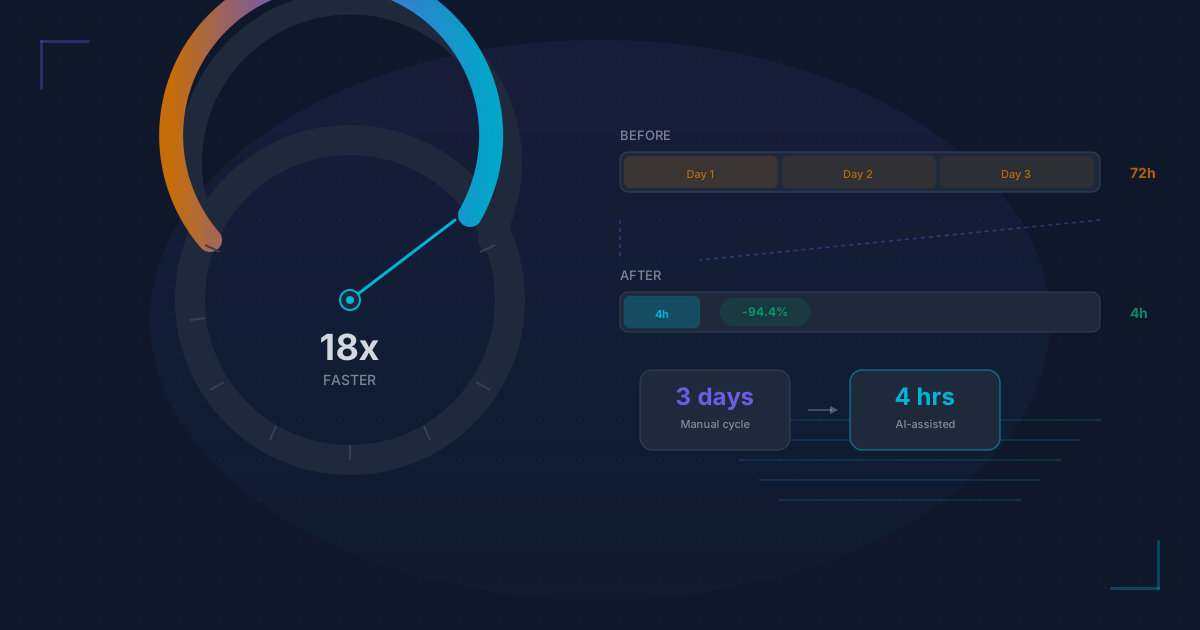
Every engineering team knows the feeling: a backlog of hundreds of tickets, each requiring a developer to read the description, understand the context, explore the codebase, write the code, run tests, get reviews, and open a pull request. This process takes hours — sometimes days — per ticket.
Meanwhile, the business is asking: "Why does a simple bug fix take three days?"
The answer isn't that your engineers are slow. It's that the workflow between "ticket created" and "PR merged" is fundamentally manual, repetitive, and ripe for automation.
The Traditional Workflow Is Broken
Here's what a typical ticket lifecycle looks like today:
- PM writes a ticket — 15 minutes of context that gets compressed into a few sentences
- Developer picks it up — reads the ticket, asks clarifying questions, waits for answers
- Developer explores the codebase — searches for relevant files, traces dependencies
- Developer writes code — the actual value-creation step, often just 20% of total time
- Developer writes tests — important but repetitive
- Code review — another developer stops their own work to review
- CI runs, possibly fails — developer context-switches back to fix
- PR merged — finally done, 2-3 days later
The actual coding is a fraction of this timeline. Most time is spent on context-gathering, navigation, review coordination, and CI troubleshooting.
Enter Multi-Agent AI Pipelines
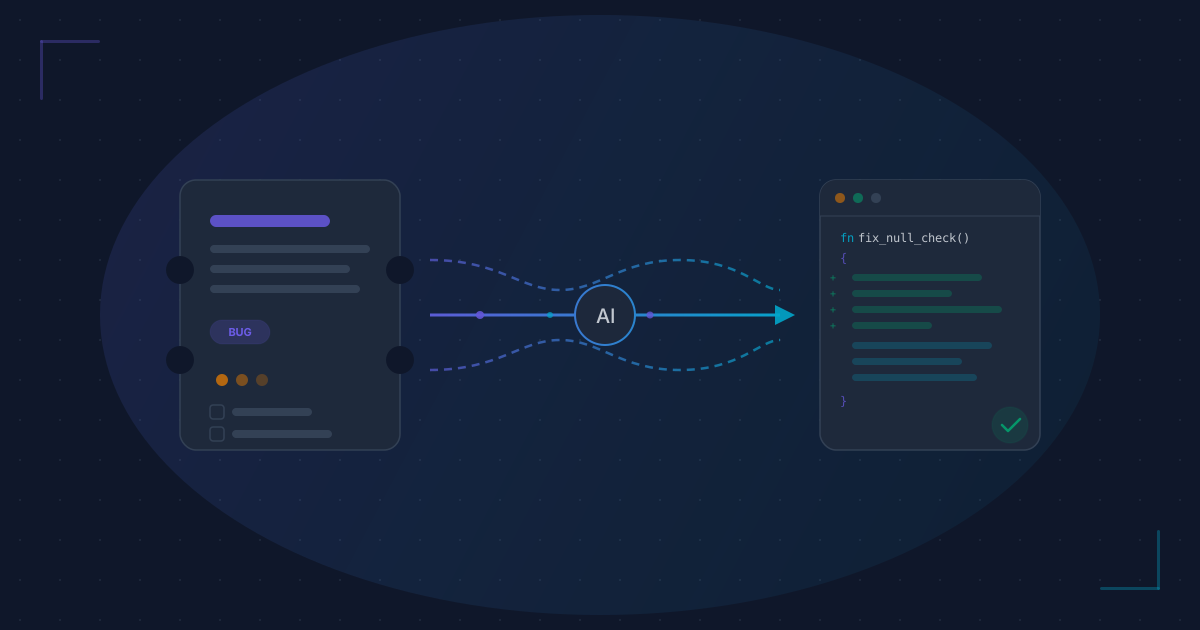
What if an AI system could handle steps 2 through 7 autonomously?
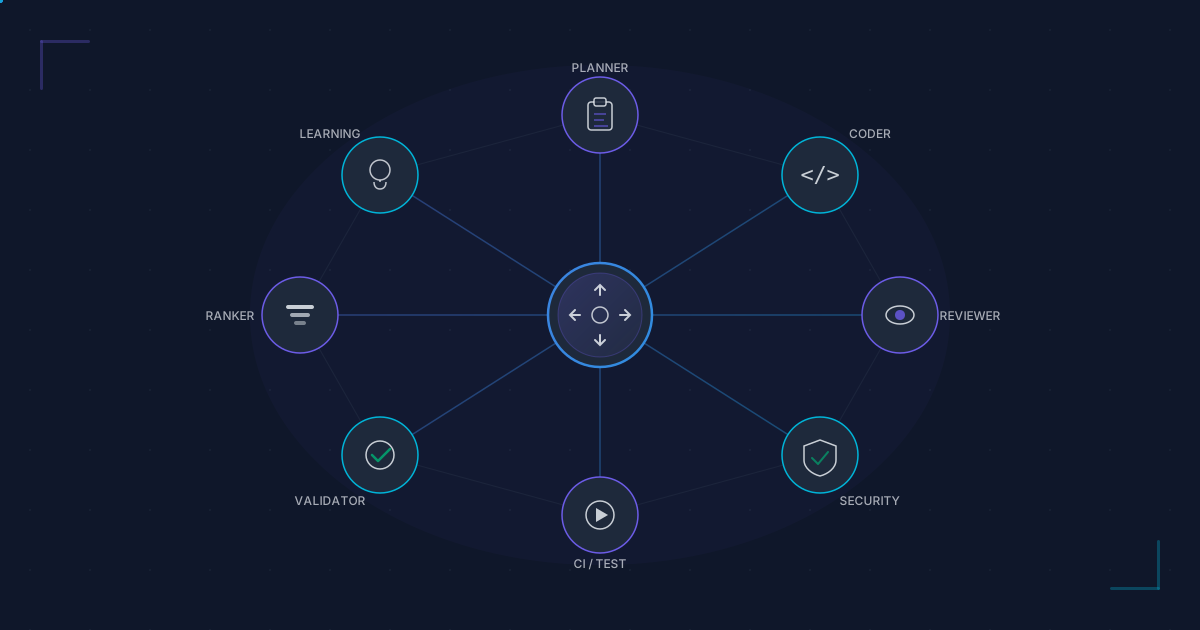
That's exactly what EnsureFix's multi-agent pipeline does. Instead of a single LLM generating code in isolation, a pipeline of specialized agents collaborates:
- PlannerAgent reads the ticket and analyzes the repository structure to create an implementation plan
- CoderAgent generates production-ready code changes in intelligent batches
- ReviewerAgent checks for logic errors, security flaws, and breaking changes
- SecurityAgent scans for OWASP-class vulnerabilities
- TestAgent generates test cases to verify the changes
Each agent is optimized for its specific task, using the right model at the right price point. Planning uses fast, cheap models. Code generation uses more capable ones.
Why This Works Now (And Didn't Before)
Three things changed in 2024-2025 that made autonomous ticket-to-PR pipelines viable:
1. Context Windows Got Large Enough
Modern LLMs can process 100K+ tokens in a single call. That's enough to include a ticket description, implementation plan, and several thousand lines of relevant source code — all in one prompt.
2. Code Quality Crossed the Threshold
Claude Sonnet and similar models generate code that passes tests, follows conventions, and handles edge cases. Not perfectly every time, but reliably enough that a validation layer can catch the remaining issues.
3. Cost Dropped Below Manual Cost
At $3/M input tokens and $15/M output tokens, processing a typical ticket costs $2-10 in API calls. Compare that to a senior engineer's hourly rate, and the economics are clear — even when the AI needs multiple attempts.
The Safety Question
The biggest objection we hear is: "I don't trust AI to write production code."
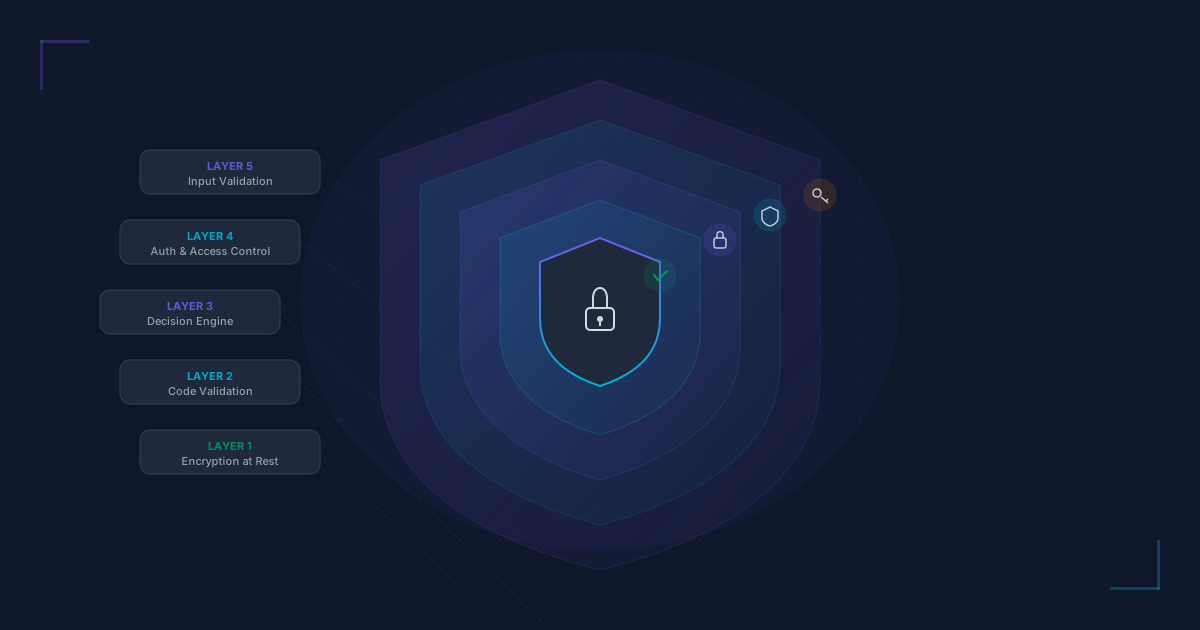
That's the right instinct — and it's exactly why validation layers are critical. EnsureFix doesn't blindly commit AI-generated code. Instead, it runs multiple validation passes:
- Plan quality checks before code generation even starts
- 16-point post-generation validation covering behavior mismatch, regression risk, incomplete fixes, and more
- Confidence scoring that routes low-confidence changes to human review
- Approval gates where humans can review plans and diffs before commits
The result: high-confidence fixes auto-apply, complex changes surface for human review, and clearly risky changes are blocked entirely.
What This Means for Engineering Teams
AI code generation from tickets doesn't replace developers. It changes what developers spend their time on:
- Less: reading tickets, searching codebases, writing boilerplate, waiting for reviews
- More: architecture decisions, product strategy, complex problem-solving, code review of AI-generated changes
Teams using autonomous pipelines report 3-10x improvements in cycle time without sacrificing quality. The AI handles the volume; humans handle the complexity.
Getting Started
If you're considering AI code generation for your team, EnsureFix makes it easy to start small:
- Pick a category of tickets — bug fixes and small features are ideal starting points
- Keep humans in the loop — use approval gates for the first few weeks
- Track quality metrics — monitor rejection rates and iterate on validation rules
- Scale gradually — increase automation as confidence builds
The future of software development isn't developers vs. AI. It's developers with AI, processing 10x the tickets at 10x the speed, while focusing their expertise where it matters most. EnsureFix is built to get you there safely.
Ready to automate your tickets?
See ensurefix process a real ticket from your backlog in a live demo.
Request a Demo